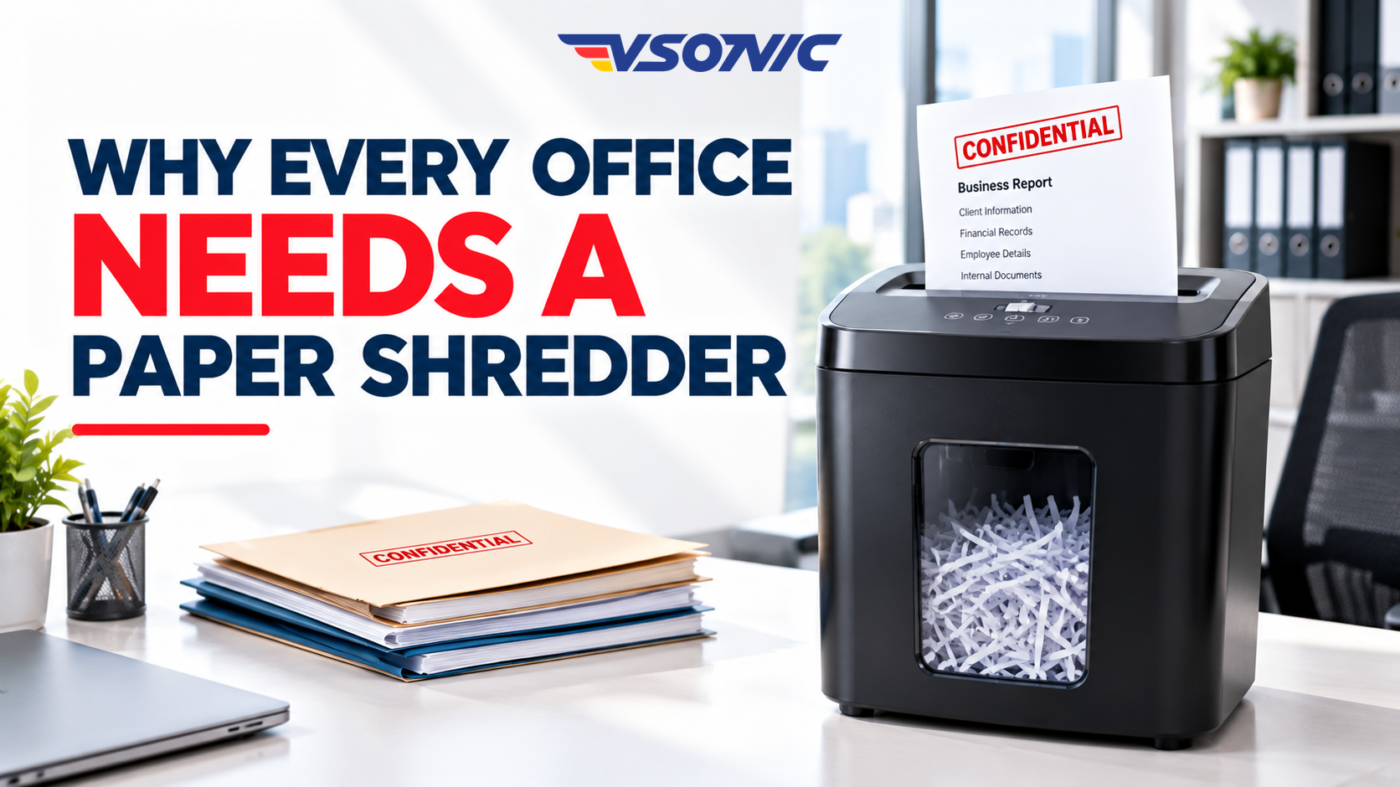
In today’s business environment, protecting confidential information is just as important as protecting computers, files, and office equipment. While many organisations invest in cybersecurity, document management systems, and access control, one important security tool is often overlooked: the paper shredder.
From customer records and employee information to financial statements and internal business documents, offices handle sensitive information every day. Simply throwing these papers into a waste bin can expose confidential details to people who should never have access to them.
A paper shredder offers a practical way to dispose of sensitive documents securely, reduce the risk of information leaks, and maintain a more organised workplace.
Whether you manage a small business, corporate office, school, hospital, or financial institution in Nigeria, here is why a paper shredder deserves a place in your office.
1. Protect Confidential Business Information
Office documents often contain information that should not be accessible to the public. Examples include contracts, invoices, employee records, customer details, internal reports, and business proposals.
When these documents are no longer needed, discarding them intact can expose sensitive information. Someone could retrieve them from an unsecured waste bin and potentially misuse the details.
A paper shredder destroys documents into smaller pieces, making the original information more difficult to reconstruct. For confidential paperwork, cross-cut or micro-cut shredders generally provide stronger protection than basic strip-cut models.
Why it matters: Secure document disposal helps reduce the chances of confidential business information falling into the wrong hands.
2. Reduce the Risk of Identity Theft and Fraud
Documents can contain names, addresses, telephone numbers, signatures, account information, identification details, and other personal data.
If such information is improperly discarded, it could potentially be used for impersonation, social engineering, or fraudulent activities.
Businesses that handle customer information or employee records should establish clear procedures for disposing of documents containing personal data. Shredding is a useful part of that process, alongside secure storage, restricted access, and appropriate records-retention policies.
In Nigeria, organisations should also consider their obligations under applicable data protection requirements, including the Nigeria Data Protection Act 2023.
A paper shredder cannot prevent every form of fraud, but it can close one avoidable gap in information security.
3. Support Data Protection and Regulatory Compliance
Many businesses must manage personal, financial, and commercially sensitive information responsibly. This responsibility extends beyond collecting and storing data to deciding when and how information should be disposed of.
For example, a company may need to dispose of expired customer forms, duplicate employee records, outdated financial documents, or printed reports containing personal information.
A secure disposal procedure can help demonstrate that an organisation takes information protection seriously.
However, shredding should not happen simply because a document is old. Businesses should follow their retention schedules and preserve records required for legal, tax, audit, contractual, or regulatory purposes.
For Nigerian organisations, it is sensible to align document-disposal policies with applicable data protection and sector-specific requirements.
4. Keep Your Office Clean and Organised
Paper clutter can accumulate quickly in busy offices. Outdated reports, duplicate printouts, expired notices, and unnecessary working documents may occupy valuable desk and storage space.
A paper shredder helps employees dispose of unwanted documents promptly instead of allowing them to pile up.
When combined with a clear document-management policy, shredding can support a tidier and more organised workplace.
This is particularly useful for offices that still depend on printed records, including administrative departments, schools, accounting firms, clinics, and businesses that process large volumes of paperwork.
5. Protect Customer Trust and Business Reputation
Customers expect organisations to handle their personal information responsibly. Employees, suppliers, and business partners also trust companies to protect confidential documents.
If sensitive paperwork is found in public waste or exposed through careless disposal, the consequences can extend beyond the immediate information leak. The organisation may face complaints, reputational damage, financial losses, or regulatory scrutiny, depending on the circumstances.
Using a paper shredder as part of a broader security process demonstrates that information protection applies to physical documents as well as digital records.
Trust is built through consistent practices, and secure disposal is one practical way to support it.
6. Improve Office Productivity and Document Management
A paper shredder can make routine document disposal more convenient, particularly in offices that regularly print and process paperwork.
Instead of collecting unnecessary documents for occasional disposal, employees can securely destroy eligible papers as part of their normal workflow.
For busy offices, a suitable shredder can help manage the disposal process more efficiently. Larger organisations may benefit from a central shredding station, while smaller businesses may prefer a compact unit near the administrative desk.
The key is choosing a machine that matches the volume of documents the office produces.
7. Choose the Right Paper Shredder for Your Office
Not every paper shredder is suitable for every workplace. Before purchasing one, consider how frequently it will be used, how many employees will share it, and how sensitive the documents are.
| Feature | What to consider |
|---|---|
| Cut type | Strip-cut for basic disposal; cross-cut or micro-cut for greater confidentiality |
| Sheet capacity | How many sheets the shredder can handle per pass |
| Shredding volume | Whether it suits occasional use or frequent office workloads |
| Bin capacity | A larger bin reduces how often it needs emptying |
| Continuous run time | Important for offices shredding many documents at once |
| Noise level | Relevant for shared offices and quiet workspaces |
| Safety features | Look for appropriate safety controls and protection against overheating or overloading |
| Maintenance | Check lubrication requirements, compatible supplies, warranty, and service support |
For a small office, a compact cross-cut shredder may be sufficient. A larger organisation with multiple departments may need a higher-capacity model designed for frequent use.
Before buying, check the manufacturer’s specifications rather than relying on appearance or price alone.
8. Establish a Secure Document-Shredding Policy
Buying a shredder is only the first step. Employees also need to understand which documents should be shredded, which must be retained, and how confidential paperwork should be handled before disposal.
A practical office policy should include:
- Document classification: Identify paperwork containing personal, financial, confidential, or commercially sensitive information.
- Retention periods: Keep records for the required period before authorising disposal.
- Access controls: Restrict access to confidential documents and secure disposal bins.
- Approved disposal procedures: Specify which documents require shredding and who is responsible.
- Equipment maintenance: Empty bins regularly and maintain the shredder according to the manufacturer’s instructions.
- High-volume disposal: Consider a reputable secure shredding service if the office produces more documents than its equipment can handle.
Remember that paper shredding is one part of a wider information-security programme. It should complement digital security, access controls, employee training, and proper records management.
Frequently Asked Questions
Does every office need a paper shredder?
Most offices that handle confidential printed information can benefit from secure document disposal. The appropriate solution may be an in-house shredder or a professional shredding service, depending on document volume and security requirements.
Which paper shredder is best for office use?
The best model depends on the volume of documents, sensitivity of the information, required cut type, sheet capacity, and expected frequency of use. Cross-cut shredders are a practical choice for many offices seeking stronger confidentiality than strip-cut models provide.
Can shredded paper be recycled?
Often, yes, depending on the shred size, contamination, and the requirements of the local recycling facility. Check with your recycling provider before mixing shredded paper with other recyclable materials.
Should all old office documents be shredded?
No. Some records must be retained for legal, financial, audit, or operational reasons. Follow an approved retention schedule and confirm that a document is eligible for disposal before shredding it.
Final Thoughts: Make Secure Document Disposal an Office Priority
A paper shredder may seem like a minor piece of office equipment, but it can play an important role in protecting confidential information, reducing avoidable data exposure, and maintaining an organised workplace.
For Nigerian businesses, schools, financial institutions, professional firms, and corporate offices, secure document disposal should be part of everyday information management.
The right shredder depends on your workload, security requirements, and budget. By choosing suitable equipment and establishing clear disposal procedures, your organisation can manage paper records more responsibly.
Equipping your office for greater productivity and security? Visit VSONIC.NG to explore technology and office equipment for modern workplaces.