
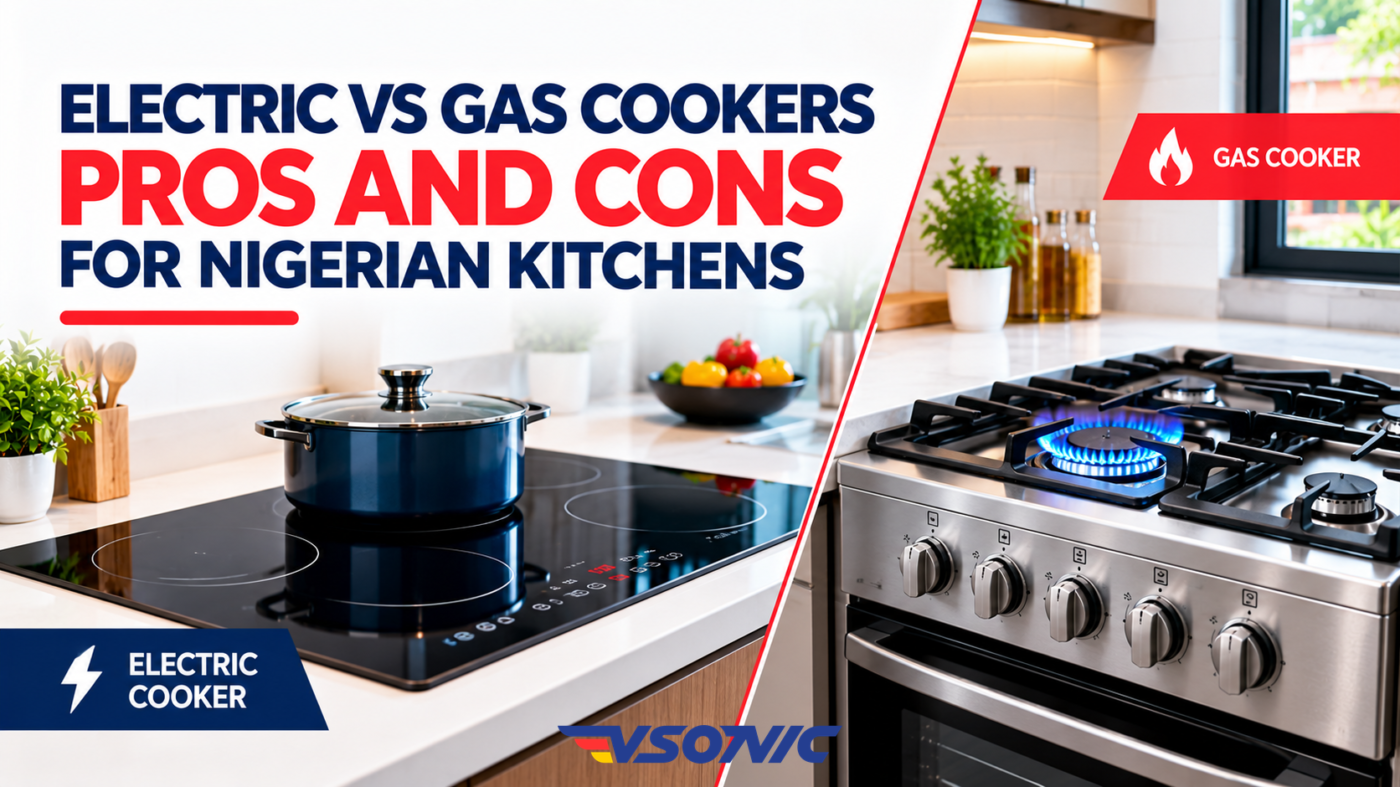
Choosing the right cooker can make everyday cooking easier, more convenient, and more affordable. But for many Nigerian households, the choice between an electric cooker and a gas cooker is not always straightforward.
Electricity supply can be unreliable in some areas. Cooking gas prices also fluctuate. Add household budgets, kitchen space, and different cooking habits to the equation, and choosing the right appliance becomes even more important.
So, which is better for your kitchen: an electric cooker or a gas cooker?
Both have advantages and disadvantages. The best option depends on your budget, energy supply, cooking needs, and kitchen setup.
In this guide, we compare electric and gas cookers to help you make the right decision for your home.
1. What Is the Difference Between Electric and Gas Cookers?
An electric cooker uses electricity to generate heat. Depending on the model, it may have traditional heating elements, ceramic hotplates, induction technology, or an electric oven.
A gas cooker uses cooking gas, usually liquefied petroleum gas (LPG), to produce a flame that heats your pots and pans.
Both can prepare everyday Nigerian meals, including rice, beans, soups, stews, and yam. However, they differ in how they operate, their running costs, and the level of convenience they offer.
Let’s look at their advantages and disadvantages.
2. Electric Cookers: Pros and Cons
Electric cookers are popular among people who prefer modern kitchen appliances and convenient cooking controls. However, their suitability depends largely on electricity availability and the type of cooker you choose.
Advantages of Electric Cookers
Easy temperature control
Electric cookers allow you to adjust heat using simple controls. Induction models, in particular, can heat food quickly and offer precise temperature adjustments.
This is useful when simmering soups, preparing sauces, or cooking meals that require consistent heat.
A modern kitchen appearance
Many electric cooktops have sleek surfaces that complement contemporary kitchen designs.
Ceramic and induction cooktops can also be easier to wipe clean than gas cookers with separate burner grates.
No combustion emissions from the cooker
Electric cookers do not burn gas at the cooking surface. This means they do not produce combustion pollutants, such as carbon monoxide, from the appliance itself.
However, cooking can still produce smoke and fine particles, particularly when frying. Proper kitchen ventilation remains important.
Potentially efficient cooking
Induction cookers heat compatible pots directly instead of heating a burner first. This can reduce wasted heat and help food cook faster.
However, performance varies by model, and induction cookers require compatible cookware.
Disadvantages of Electric Cookers
They depend on electricity
This is a major consideration for Nigerian households.
When the power goes out, a standard electric cooker cannot operate unless you have a suitable alternative power source. Frequent outages can delay meal preparation and make an electric-only kitchen inconvenient.
Some models require substantial power
Electric cookers, especially larger models and those with ovens, can consume considerable power.
Before buying, check the appliance’s power rating and ensure your home’s electrical installation can support it safely.
Also, do not assume that an ordinary inverter or portable power station can operate a high-powered cooker.
Running costs can vary
Your electricity bill depends on the cooker’s energy consumption, your electricity tariff, and how often you cook.
An efficient induction cooker may use less energy for a particular meal than a conventional electric hotplate. However, actual costs depend on the appliance and your cooking habits.
Some require special cookware
Induction cookers need pots and pans with compatible magnetic bases. If your existing cookware is unsuitable, you may need to buy replacements.
Traditional electric hotplates generally accommodate a wider range of cookware.
The surface may remain hot
Some electric cooktops retain heat after being switched off. This can create a burn risk, particularly in homes with children.
Always follow the manufacturer’s safety instructions and allow the surface to cool before touching it.
3. Gas Cookers: Pros and Cons
Gas cookers remain a practical choice for many Nigerian households because they provide direct heat and can operate without grid electricity when a suitable gas supply is available.
Advantages of Gas Cookers
You can cook during power outages
A gas cooker with manual ignition can continue working during a blackout, provided you have enough cooking gas.
This is particularly useful when electricity supply is unreliable.
However, some models rely on electric ignition or have electric ovens. Check these features before buying if you want to cook during power outages.
Quick and responsive heat control
Gas burners produce a visible flame that you can adjust immediately.
This makes it easy to switch from high heat for boiling to a low flame for simmering soups, sauces, and stews.
Suitable for everyday Nigerian meals
Gas cookers can handle a wide range of cooking needs, from preparing large pots of soup to boiling beans and cooking rice.
Models with different burner sizes also allow you to use different pot sizes conveniently.
Works with most common cookware
Gas cookers generally accommodate common cookware materials, including stainless steel, aluminium, and cast iron.
This means you can often continue using your existing pots and pans without buying special cookware.
Available in different sizes
Whether you need a single burner for a small apartment or a larger cooker for family meals, there are different configurations to consider.
Some models also include an oven for baking and roasting.
Disadvantages of Gas Cookers
You must monitor your gas supply
Running out of gas while cooking can be frustrating, especially when you need to travel to a supplier for a refill.
If you cook frequently, monitor your gas levels and plan refills ahead of time.
Gas prices fluctuate
LPG prices vary by location, supplier, and market conditions. Your monthly cooking expenses will also depend on how much gas you use.
This makes it important to consider both the price of gas and your household’s cooking habits.
Gas leaks can be dangerous
A damaged hose, faulty regulator, or loose connection can cause a gas leak and create a fire hazard.
Use suitable components, ensure proper installation, and have your cooker and gas connections checked by a qualified technician.
If you suspect a leak, avoid flames and do not operate electrical switches in the affected area. Leave the area and contact a qualified professional or emergency service. Shut off the supply only if it is safe to do so.
Ventilation is essential
Gas combustion produces pollutants, including nitrogen dioxide and, under certain conditions, carbon monoxide.
Proper ventilation and regular maintenance are essential for safer indoor cooking. Never use a gas cooker as a substitute for a room heater.
Cleaning may take more effort
Gas burners and grates can collect grease and food debris. Regular cleaning helps keep the cooker hygienic and supports proper burner operation.
4. Electric vs Gas Cookers: A Quick Comparison
Here’s how the two options compare on the features that matter most to Nigerian households.
| Feature | Electric cooker | Gas cooker |
|---|---|---|
| Energy source | Electricity | Usually LPG |
| During blackouts | Needs suitable backup power | Manual-ignition models can work if gas is available |
| Heat control | Depends on the model; induction offers precise control | Adjustable flame |
| Indoor combustion emissions | None from the cooker itself | Produces combustion by-products |
| Cookware | Induction requires compatible pots | Works with most common cookware |
| Cleaning | Smooth models are often easier to clean | Burners and grates need more attention |
| Running costs | Depend on electricity tariffs and consumption | Depend on gas prices and consumption |
| Installation | Requires suitable electrical capacity | Requires safe gas installation |
The bottom line: Neither option is best for every household. Your electricity supply, budget, and cooking needs should guide your decision.
5. Which Cooker Is Cheaper to Run in Nigeria?
Many buyers want to know whether electricity or cooking gas costs less. Unfortunately, there is no single answer for every household.
The cost depends on local energy prices, the appliance’s efficiency, and how often you cook.
For an electric cooker, multiply the electricity consumed in kilowatt-hours (kWh) by your applicable tariff.
For example, if a cooker consumes 1.5 kWh during a cooking session, multiply 1.5 by your tariff per kWh to estimate the electricity cost for that session.
For a gas cooker, estimate how much LPG you use to prepare the same meal and multiply it by the price per kilogram.
To make a fair comparison, consider:
- How much energy each cooker uses.
- How long you cook each meal.
- How frequently you prepare meals.
- The efficiency of each appliance.
- Installation, maintenance, and replacement costs.
- Whether you need backup power for electric cooking.
Comparing purchase prices alone will not tell you which cooker is cheaper in the long run.
6. Which Cooker Is Best for Your Household?
Your daily routine can help determine which cooker is right for you.
For households with frequent power outages
A gas cooker with manual ignition may be more convenient because it can operate without grid electricity.
For modern apartments
An electric or induction cooktop may suit a contemporary kitchen, provided the electrical installation can support it.
For students and people living alone
A compact single-burner cooker may be sufficient. Consider your accommodation rules, available space, ventilation, and power supply before buying.
For large families
Look for a cooker with enough burners and cooking capacity for your household. Compare energy costs and convenience rather than choosing based on appearance alone.
For homes with solar or inverter systems
An electric cooker may be suitable if your power system can safely support its requirements. High-powered cooking appliances can place considerable demands on batteries and inverters, so confirm compatibility with a qualified installer.
Some households may prefer using both options. For example, gas can handle everyday cooking while a small electric cooker provides an alternative for selected meals. However, both appliances must be installed and used safely.
7. Safety Tips Before Buying a Cooker
Whichever option you choose, safety should come first.
- Check installation requirements. Make sure your kitchen can accommodate the appliance safely.
- Choose the right size. Match the number of burners to your household’s cooking needs.
- Check safety features. Look for suitable electrical protection or gas safety features.
- Ensure proper ventilation. This is especially important when cooking with gas.
- Protect children. Keep children away from flames, hot surfaces, and unattended cookware.
- Use qualified installers. Gas and electrical installations should meet applicable safety requirements.
- Follow the manufacturer’s instructions. Correct operation and maintenance help prevent avoidable hazards.
A cooker should offer convenience without compromising your household’s safety.
Final Verdict: Electric or Gas Cooker?
Both electric and gas cookers can be excellent choices for Nigerian kitchens.
A gas cooker may be better if you experience frequent power outages, prefer direct flame control, and have safe access to cooking gas.
An electric cooker may suit you better if you have dependable electricity, appropriate electrical wiring, and prefer modern cooking surfaces or induction technology.
For some households, having both options provides additional flexibility.
Ultimately, choose a cooker that matches your cooking habits, budget, kitchen space, energy supply, and safety requirements.
Find Kitchen Appliances at VSONIC.NG
Looking for kitchen appliances for your home? VSONIC.NG offers a destination for exploring technology, home appliances, and everyday essentials in Nigeria.
Whether you’re setting up a new kitchen or upgrading your existing appliances, take the time to compare your options and choose what works for your household.
Visit VSONIC.NG to explore available kitchen appliances.
Frequently Asked Questions
Is a gas cooker better than an electric cooker in Nigeria?
A gas cooker can be more convenient when electricity supply is unreliable. An electric cooker may be preferable for households with dependable electricity and suitable wiring.
Is an electric cooker cheaper to run than a gas cooker?
Not always. Running costs depend on electricity tariffs, LPG prices, appliance efficiency, and how frequently you cook.
Can an electric cooker work with an inverter?
Some can, but the inverter and battery system must meet the cooker’s power requirements. Confirm compatibility with a qualified installer before connecting the appliance.
Which cooker is safer for indoor use?
Both can be used safely when correctly installed and maintained. Electric cookers avoid combustion emissions at the cooking surface, while gas cookers require careful leak prevention and adequate ventilation.
Can I use my existing pots on an electric cooker?
Traditional electric hotplates generally support many types of cookware. Induction cookers require compatible pots, usually with magnetic bases.
Is buying both electric and gas cooking appliances worthwhile?
It can be worthwhile if you need flexibility and have enough space and budget. Check which functions require electricity before choosing a dual-fuel cooker.