
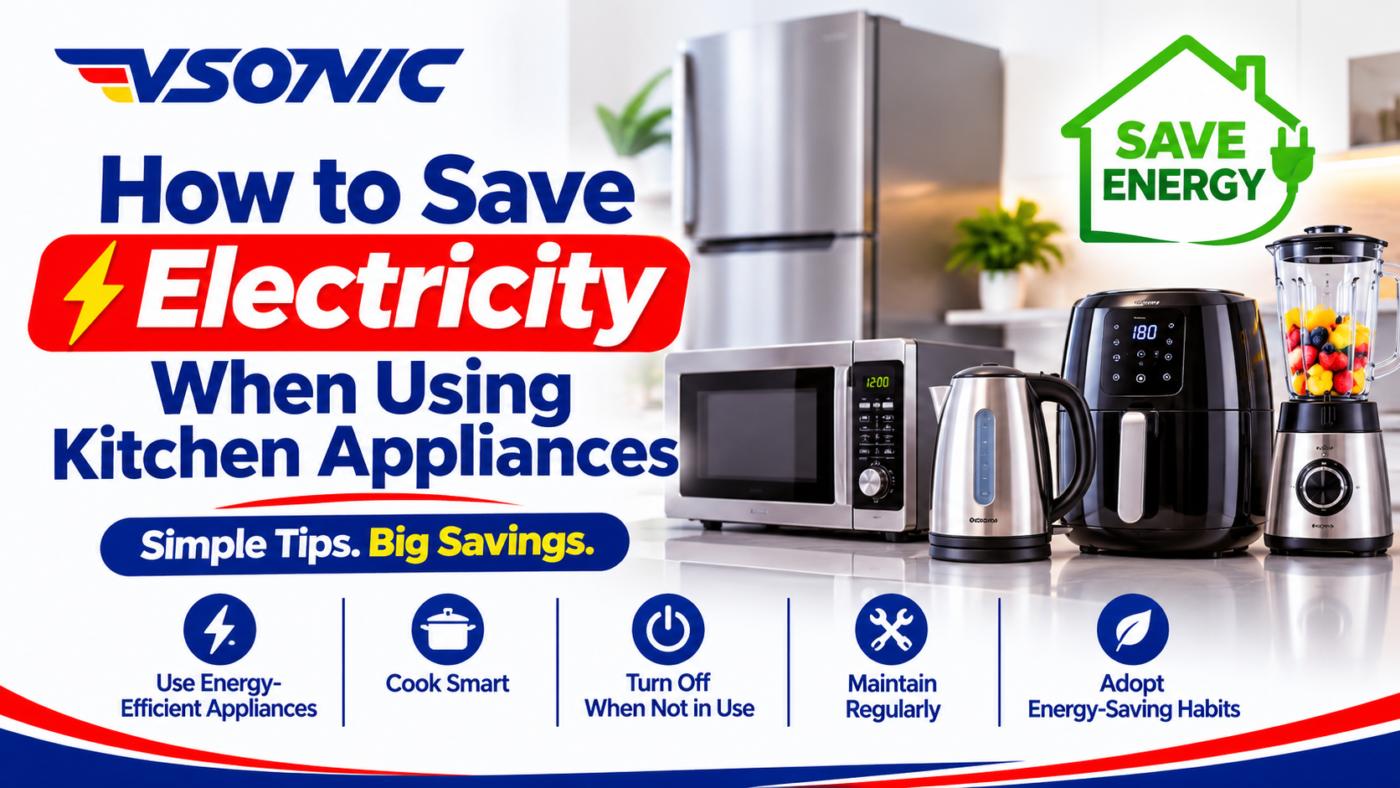
Your kitchen can be a major contributor to your electricity consumption. From refrigerators and freezers that run throughout the day to electric kettles, blenders, microwaves and cookers, these appliances make everyday tasks easier. However, using them carelessly can lead to unnecessary energy consumption and higher electricity bills. By making a few adjustments to how you cook, store food and operate your devices, you can save electricity when using kitchen appliances without sacrificing convenience.
Here are 10 practical ways to make your kitchen more energy-efficient, particularly if you rely on electricity from the grid, an inverter or a solar power system in Nigeria.
1. Choose Energy-Efficient Kitchen Appliances
One of the best ways to manage electricity consumption starts before you even plug in an appliance.
When buying a refrigerator, freezer, microwave or cooker, compare its rated power consumption and energy-efficiency information. Where available, check the estimated annual energy consumption in kilowatt-hours (kWh).
Also, choose an appliance that suits your household. A large refrigerator may be unnecessary for someone living alone, while a small blender may not meet the needs of a large family.
Remember that an appliance with a higher wattage does not automatically consume more electricity in every situation. Actual consumption depends on how long it operates and how it is designed to work.
2. Avoid Overfilling Your Electric Kettle
Electric kettles are convenient for boiling water, but filling them unnecessarily increases the amount of water that needs to be heated.
If you only need enough hot water for one or two cups of tea, there is little reason to boil a full kettle.
Try these simple habits:
- Measure the water you need before filling the kettle.
- Descale the kettle when mineral deposits build up, following the manufacturer’s instructions.
- Switch it off once the water has boiled.
- Avoid repeatedly boiling water that is already hot.
These small changes can reduce wasted energy over time.
3. Use Your Refrigerator and Freezer Properly
Refrigerators and freezers are among the appliances that require special attention because they operate continuously.
Poor usage habits can make them work harder than necessary.
To improve efficiency:
- Avoid leaving the door open while deciding what to remove.
- Check that the door seals close properly.
- Allow very hot food to cool appropriately before refrigerating it.
- Avoid blocking internal air vents.
- Defrost manual-defrost freezers when ice builds up, following the manufacturer’s instructions.
- Keep the appliance away from direct sunlight and unnecessary heat sources.
Also, avoid setting the temperature colder than necessary. Follow the manufacturer’s recommended temperature settings to keep food safe while managing energy use.
4. Cook with Lids on Your Pots and Pans
Whether you are preparing rice, beans, stew or soup, using a lid while cooking can help retain heat.
Without a lid, more heat escapes into the surrounding air, meaning your cooker may need to work longer to maintain the required temperature.
For better cooking efficiency:
- Use appropriately sized pots and pans.
- Keep lids on when the recipe allows.
- Avoid repeatedly removing lids to check food.
- Use only the amount of water required.
- Reduce the heat once the food reaches the desired cooking temperature, where appropriate.
These habits can help reduce unnecessary heat loss and cooking time.
5. Use the Right Appliance for the Job
Not every meal requires a large electric cooker or oven.
For smaller portions, a microwave or air fryer may be more practical, depending on the food and appliance specifications. A kettle may also heat water more efficiently than using a large cooking appliance for the same task.
For example:
- Use a microwave to reheat leftover food.
- Use an air fryer for suitable smaller portions.
- Use a blender for food preparation rather than running larger equipment unnecessarily.
- Use an electric rice cooker for its intended cooking function and follow the manufacturer’s instructions.
The best choice depends on the appliance’s wattage, cooking time, food quantity and efficiency. Compare the actual energy required for the task rather than assuming one appliance is always cheaper to operate.
6. Avoid Opening the Oven Door Repeatedly
Every time you open an oven while it is operating, some of the hot air escapes.
The oven then needs to restore its temperature, which can increase cooking time and energy consumption.
Instead:
- Use the oven light and viewing window to monitor food.
- Prepare ingredients before switching the oven on.
- Cook suitable dishes together when possible.
- Avoid unnecessary preheating when the recipe and appliance instructions do not require it.
If you regularly cook large quantities, planning meals together can help you make better use of the oven’s operating time.
7. Switch Off Appliances You Are Not Using
Some kitchen appliances continue drawing electricity when left on standby.
Microwaves with digital clocks, coffee makers and other electronic appliances may consume small amounts of power even when they are not actively performing their main functions.
When you have finished using an appliance, switch it off properly. Unplug it or use a suitable switched socket where the manufacturer’s instructions allow.
However, do not switch off refrigerators and freezers simply to save standby electricity. They need continuous power to maintain safe storage temperatures.
8. Maintain Your Kitchen Appliances Regularly
An appliance that is dirty, poorly maintained or developing a fault may not operate as efficiently as it should.
Regular maintenance can help keep your equipment working properly and may prevent unnecessary energy consumption.
Consider these simple practices:
- Clean refrigerator door seals.
- Remove dust from accessible ventilation areas.
- Descale kettles when necessary.
- Clean microwave interiors after spills.
- Keep blender blades and containers clean.
- Follow the manufacturer’s maintenance instructions for cookers and other appliances.
If an appliance suddenly starts consuming unusually high amounts of electricity, making strange noises or overheating, have it inspected by a qualified technician.
9. Plan Your Cooking and Reduce Repeated Appliance Use
A little planning can help you avoid switching appliances on and off repeatedly.
For instance, if you are preparing several meals for the week, you can cook suitable portions together and store them safely for later use.
Batch cooking can reduce repeated heating and preparation, while reheating suitable leftovers in a microwave may be more efficient than preparing a completely new meal.
You can also organise food preparation so that your blender, food processor and other appliances are used only when needed.
The goal is to reduce unnecessary operating time without compromising food safety or cooking quality.
10. Consider Your Inverter or Solar Power Capacity
For Nigerian households that use inverters or solar power systems, kitchen appliances require additional planning.
Some appliances, particularly electric kettles, microwaves, cookers and air fryers, can have relatively high power requirements. Running several of them simultaneously may overload an undersized inverter or drain a battery bank quickly.
Before connecting an appliance to your backup power system:
- Check its rated wattage.
- Confirm that your inverter can handle the load.
- Consider the appliance’s starting or surge requirements where applicable.
- Check your battery’s usable energy capacity.
- Avoid running multiple high-power appliances simultaneously if your system cannot support them.
For example, a refrigerator may operate alongside smaller devices, but adding an electric kettle and microwave could exceed the available inverter capacity.
If you are unsure, consult a qualified installer to assess your power requirements.
Final Thoughts
Saving electricity in the kitchen does not mean giving up convenience or avoiding modern appliances. It simply means using them more intentionally.
From boiling only the water you need and keeping refrigerator doors closed to maintaining appliances and planning your cooking, small adjustments can help reduce unnecessary electricity consumption.
When buying new equipment, also consider its energy consumption, capacity and suitability for your household.
Looking for practical kitchen appliances that make everyday cooking easier? Explore the Kitchen collection on VSONIC.NG and discover appliances for your home.
VSONIC.NG – Everything Tech. One Platform. One VSONIC.