
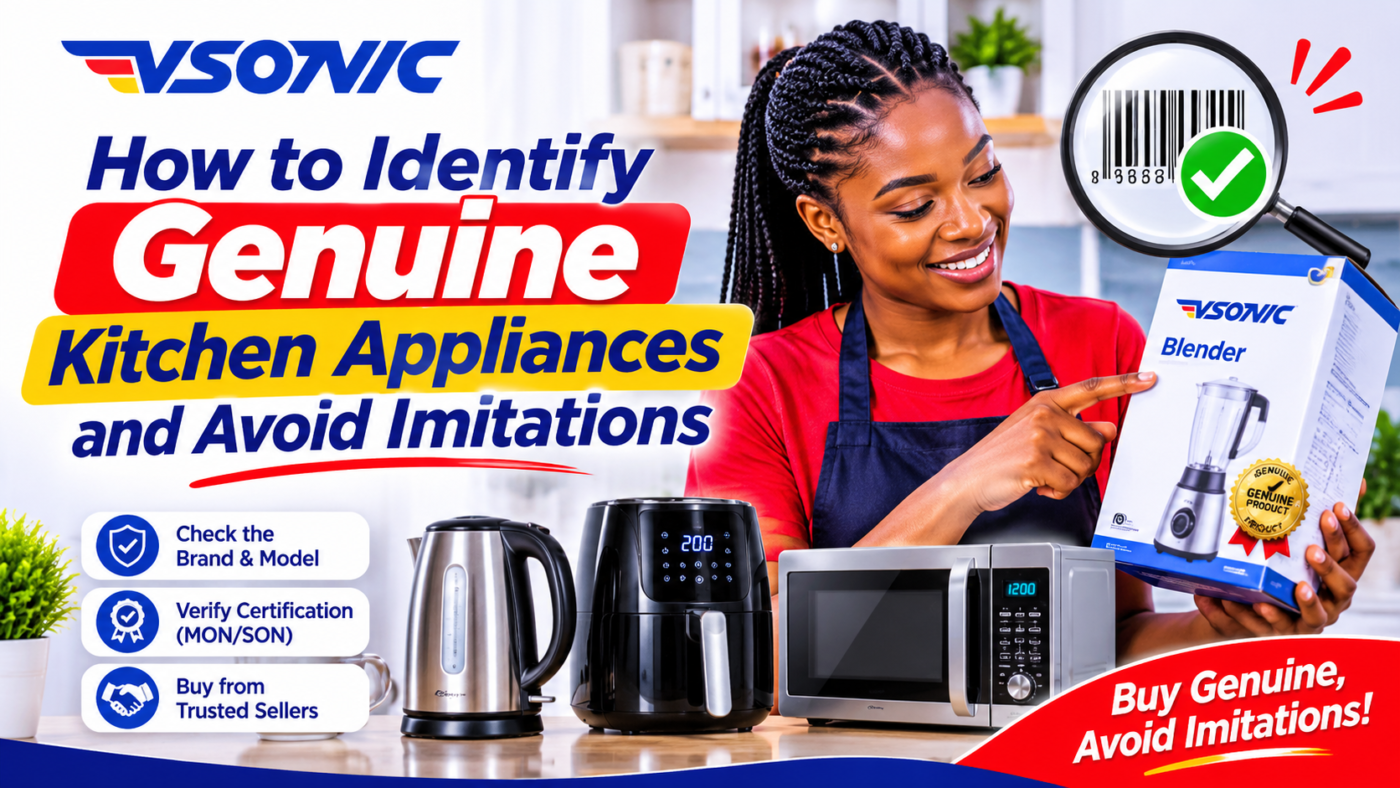
Buying genuine kitchen appliances should make everyday cooking easier, faster and more convenient. Whether you’re shopping for a blender, electric kettle, microwave, air fryer, gas cooker or refrigerator, you want a product that performs as expected, is safe to use and offers good value for your money.
Unfortunately, not every appliance advertised as a popular brand or premium product is genuine. Some imitations use similar packaging, familiar brand names and attractive prices to convince unsuspecting buyers. Others look almost identical to original products but may have inferior components, inconsistent performance or inadequate safety features.
For Nigerian shoppers, knowing how to identify genuine kitchen appliances is especially important when comparing products online, in physical stores or through independent sellers.
Here are practical ways to recognise genuine products and avoid imitations before making a purchase.
1. Examine the Packaging Carefully
Packaging is one of the first things to inspect when buying a kitchen appliance.
Genuine manufacturers usually maintain consistent packaging, including their logos, product images, colours, model information and printed instructions.
Watch out for:
- Misspelled brand names or product descriptions.
- Blurry logos and poor-quality printing.
- Unusual colours, fonts or packaging layouts.
- Missing manufacturer information.
- Damaged seals or signs of tampering.
These signs do not automatically prove that an appliance is fake, but several inconsistencies should make you investigate further.
2. Check the Brand Logo and Product Finishing
Counterfeit appliances sometimes imitate the appearance of popular brands. However, differences may become noticeable when you inspect the actual product.
Examine the logo, buttons, switches, handles, casing, labels and overall finishing.
For example, a genuine blender should have properly fitted components, clearly labelled controls and a well-finished body. A kettle should have a stable base, properly fitted handle and clear product markings.
Pay attention to loose components, rough edges, inconsistent branding and unusual materials.
Whenever possible, compare the appliance with images and product details from the manufacturer’s official website.
3. Verify the Model Number and Manufacturer Details
Every genuine appliance should have identifiable product information.
Look for the model number, manufacturer’s name, serial number where applicable, electrical ratings and other identification details on the appliance or its rating plate.
Use these details to compare the product with information published by the manufacturer.
For instance, if you’re buying an electric kettle, confirm that its model number matches the manufacturer’s listed capacity, power rating and design. Do the same for blenders, microwaves, air fryers and other appliances.
If the seller cannot explain differences between the advertised product and the manufacturer’s specifications, ask for clarification before paying.
4. Check Applicable Certification and Safety Markings
Product certification is another important consideration when buying electrical kitchen appliances in Nigeria.
The Standards Organisation of Nigeria (SON) operates certification schemes, including the Mandatory Conformity Assessment Programme (MANCAP) for qualifying locally manufactured products. SON also identifies certification marks associated with MANCAP and Nigerian Industrial Standards (NIS).
For applicable imported regulated products, SON’s Product Authentication Mark scheme provides a way to verify product authenticity.
Check whether the relevant certification or authentication information is present and whether it can be verified through the appropriate official channels.
Remember that a printed logo or certification mark alone does not prove authenticity. Certification marks can also be copied, so verify them where possible.
5. Be Suspicious of Prices That Seem Too Good to Be True
Everyone appreciates a good deal, but an unusually low price should encourage you to investigate.
If a popular kitchen appliance is being sold significantly below its usual market price, find out why.
The product may be:
- A different model or specification.
- A used or refurbished appliance.
- An imitation or counterfeit.
- A product without the usual warranty.
- A clearance item with a genuine pricing explanation.
Compare prices across reputable retailers and confirm the exact model before deciding. A low price is not proof that an appliance is fake, but it should not replace proper product verification.
6. Buy from Reputable Retailers
Where you purchase an appliance matters.
Established retailers and authorised distributors are generally better positioned to provide reliable product information, genuine stock, receipts and after-sales support.
Before buying, check the seller’s business identity, physical address, contact information and customer feedback.
When shopping online, be cautious of sellers who use copied product images, provide vague descriptions or refuse to answer basic questions about the appliance.
A trustworthy retailer should be able to explain the product’s specifications, included accessories and warranty arrangements.
7. Ask About the Warranty and After-Sales Support
A warranty can provide useful protection if an appliance develops a fault within the stated coverage period.
Before purchasing, ask:
- Is the appliance covered by a manufacturer’s or seller’s warranty?
- How long does the warranty last?
- What faults or components are covered?
- Where can the product be serviced?
- Are replacement parts available?
Request a receipt or invoice and keep any warranty documentation.
Be cautious of vague promises such as “full warranty” when the seller cannot explain who provides the coverage or how to make a claim.
8. Inspect the Appliance Before Taking It Home
If possible, inspect the appliance before completing your purchase.
Check that the product matches the advertised model, its accessories are included, and there are no visible signs of damage or tampering.
For appliances that can safely be demonstrated, ask the seller to show that they operate correctly.
Never ignore damaged cables, exposed wiring, unusual burning smells or signs of overheating. Do not continue using an appliance that appears electrically unsafe.
What to Do If You Suspect a Fake Kitchen Appliance
If you suspect an appliance is counterfeit, do not ignore your concerns simply because the product looks convincing.
Ask the seller for clarification, verify the model with the manufacturer and preserve your receipt, packaging and any relevant photographs.
If you have already purchased the product and believe it is unsafe, stop using it and contact the manufacturer or appropriate consumer-protection authority for guidance. In Nigeria, consumers can also approach the Federal Competition and Consumer Protection Commission (FCCPC) regarding complaints about goods and services.
Shop for Genuine Kitchen Appliances with Confidence
Identifying genuine kitchen appliances requires more than checking a brand name or comparing prices. Examine the packaging, verify model numbers, check applicable certification information, understand warranty coverage and purchase from retailers you can trust.
These simple steps can help you avoid imitations, reduce the risk of buying unsafe products and make more confident purchasing decisions.
At VSONIC.NG, explore a range of kitchen appliances and technology products for your home and everyday needs. From blenders and electric kettles to other useful household essentials, make informed choices when upgrading your kitchen.
Shop electronics and tech in Nigeria at VSONIC.NG – Everything Tech. One Platform. One VSONIC.