
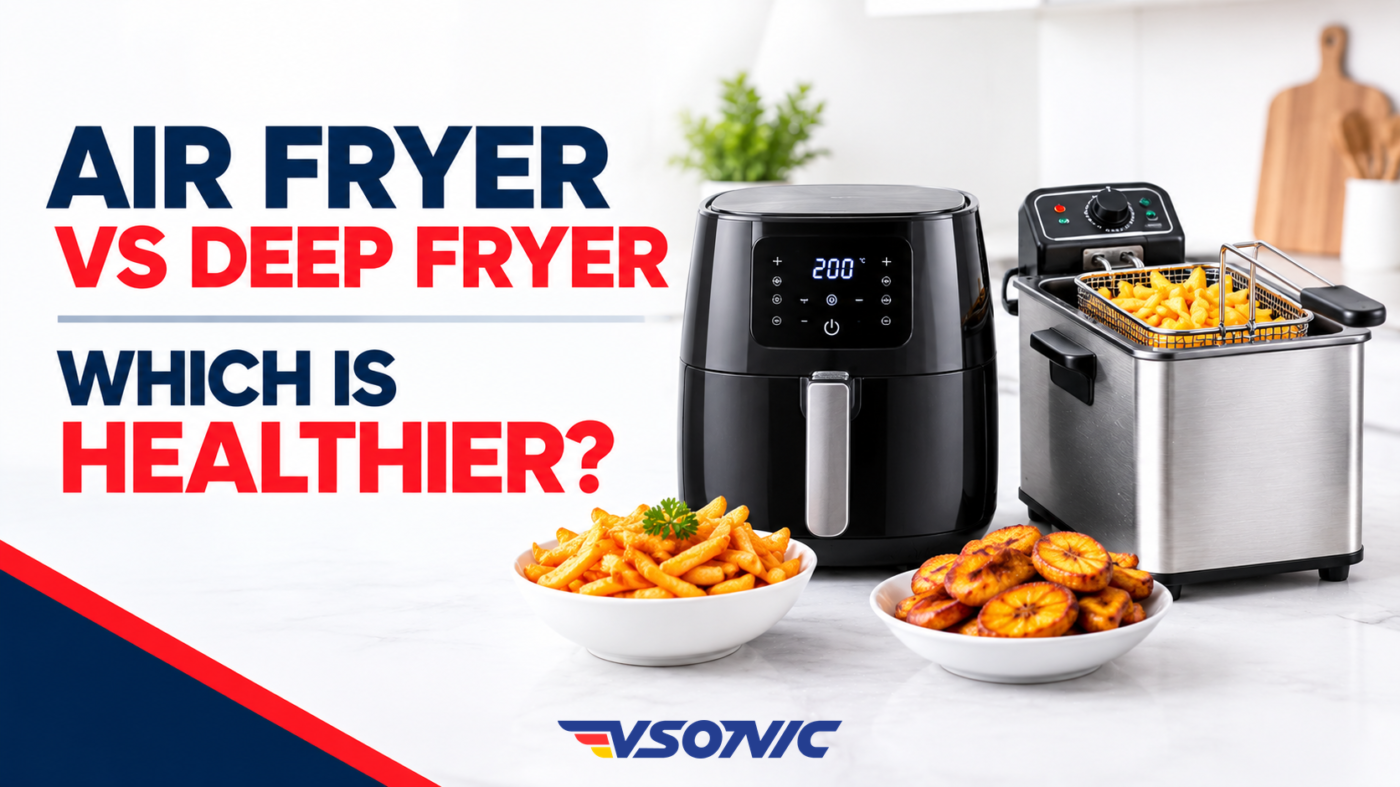
Air fryers and deep fryers can both produce delicious, crispy meals, but they prepare food differently. If you enjoy fried chicken, chips, plantain, fish, or other fried favourites, choosing between the two can affect how much oil you use and the nutritional value of your meals.
For households in Nigeria, where fried foods are popular, an air fryer can offer a convenient way to prepare familiar meals with less oil. But does that automatically make it the healthier option? Let’s compare both appliances, their benefits, limitations, and what to consider before buying one.
What Is an Air Fryer?
An air fryer is a kitchen appliance that cooks food by circulating hot air around it at high speed. This process creates a browned, crispy exterior similar to deep frying, although the final texture may differ.
Most air-fried foods require little or no added oil, depending on the recipe and ingredients. Air fryers are suitable for preparing chips, chicken, fish, vegetables, plantain, and reheating leftovers.
They are particularly useful for people who want crispy meals without the large quantity of oil typically required for deep frying.
What Is a Deep Fryer?
A deep fryer cooks food by submerging it in hot oil. The oil transfers heat quickly, helping food develop a crisp exterior while retaining moisture inside.
Deep frying is popular for preparing puff-puff, akara, yam, chips, chicken, fish, and other familiar meals. It can also deliver the characteristic flavour and texture that some foods may not achieve in an air fryer.
However, deep frying requires significantly more cooking oil, and the amount of oil absorbed by food can increase its calorie content.
Air Fryer vs Deep Fryer: Key Differences
| Feature | Air Fryer | Deep Fryer |
|---|---|---|
| Cooking method | Circulating hot air | Food submerged in hot oil |
| Oil requirement | Little or no added oil for many foods | Large quantity of oil |
| Fat and calories | Often lower when less oil is used | Often higher due to oil absorption |
| Texture | Crispy, but sometimes different from deep-fried food | Typically crisp and traditionally fried |
| Cooking versatility | Roasting, baking, reheating and air frying | Primarily deep frying |
| Cleaning | Usually simpler, depending on the model | Often more involved due to oil |
| Oil disposal | Minimal | Requires safe handling and disposal of used oil |
Which Is Healthier: Air Fryer or Deep Fryer?
For many everyday meals, an air fryer is generally the healthier option because it allows you to use much less oil.
Reducing added oil can lower the fat and calorie content of foods compared with deep-fried versions. This can be helpful for people who want to manage their calorie intake or reduce their consumption of excess dietary fat.
However, the health benefits depend on what you cook, the ingredients you use, portion sizes, and your overall diet.
1. Oil Consumption and Fat Intake
This is one of the biggest differences between the two appliances.
Deep frying requires food to be submerged in hot oil, and some of that oil can be absorbed during cooking. Air frying relies primarily on hot air, so you can often achieve a crispy result with only a small amount of oil.
For example, preparing potato chips in an air fryer with a light coating of oil will generally use less oil than deep frying the same quantity.
The result is often a meal with less added fat and fewer calories.
2. Calorie Content
Oil is calorie-dense, so using less of it can help reduce the total calories in a meal.
An air-fried chicken portion prepared with minimal oil may contain fewer calories than a comparable deep-fried portion. However, the difference varies depending on the cut of chicken, whether the skin is left on, the coating used, and how much oil the food absorbs.
Air frying does not automatically make every meal low-calorie. Ingredients, breading, sauces, and serving sizes still matter.
3. Potentially Harmful Compounds
High-temperature cooking can cause chemical changes in food. For example, acrylamide can form in starchy foods such as potatoes when they are cooked at high temperatures, particularly when browned heavily.
Air frying does not eliminate this risk. The amount formed depends on factors such as the food, temperature, cooking time, and degree of browning.
To reduce acrylamide formation, avoid cooking potatoes until they become very dark or burnt. Aim for a golden-yellow colour, follow the appliance’s instructions, and avoid unnecessarily high temperatures or prolonged cooking.
4. The Type of Food You Prepare
An air fryer can be a useful tool for preparing balanced meals, but the appliance alone does not determine how healthy your diet is.
Air-fried vegetables, fish, and lightly seasoned chicken can be nutritious options. On the other hand, heavily processed foods may still be high in sodium, saturated fat, or refined carbohydrates, even when air-fried.
Likewise, deep-fried foods can be enjoyed occasionally as part of a balanced diet. The key is moderation and your overall eating pattern.
Can an Air Fryer Replace a Deep Fryer?
For many households, yes. An air fryer can handle a wide range of everyday cooking tasks, including preparing chips, chicken, fish, vegetables, plantain, and reheating leftovers.
However, it may not perfectly reproduce the taste and texture of every deep-fried meal. Foods with wet batters, for instance, may not cook as expected in an air fryer, while traditional deep frying may be better suited to recipes that depend on complete immersion in oil.
Capacity is another consideration. A small air fryer may require several batches when cooking for a large family, whereas a deep fryer can accommodate some foods more easily, depending on its size.
Consider your household size, preferred meals, available kitchen space, and cooking habits before deciding.
What Should You Consider Before Buying an Air Fryer?
If you are considering switching to air frying, look at these important features before making a purchase.
- Capacity: Choose a size that suits the number of people you cook for and the portions you typically prepare.
- Temperature control: Adjustable settings help you cook different foods properly.
- Timer and automatic shut-off: These features make cooking more convenient and help prevent overcooking.
- Ease of cleaning: Removable baskets and non-stick components can simplify everyday maintenance.
- Power consumption: Check the appliance’s wattage and consider whether your home power supply can support it.
- Safety and build quality: Look for a reliable appliance with appropriate safety features and clear operating instructions.
For Nigerian households, it is also worth considering kitchen space, electricity availability, and how often the appliance will be used.
Frequently Asked Questions
Is air-fried chicken healthier than deep-fried chicken?
Air-fried chicken is often lower in fat and calories when prepared with less oil. The final nutritional difference depends on the chicken cut, skin, coating, and cooking method.
Can I cook Nigerian foods in an air fryer?
Yes. Depending on the recipe and appliance, you can prepare foods such as plantain, yam, potato chips, chicken, fish, and vegetables. Some recipes may need adjustments to cooking time, temperature, or preparation method.
Does an air fryer use no oil at all?
Not necessarily. Many foods can be cooked without added oil, while others benefit from a light coating for better browning, flavour, and texture.
Is deep frying always unhealthy?
No. Health depends on the overall diet, portion sizes, cooking practices, and frequency of consumption. However, frequent consumption of foods that absorb substantial amounts of oil can make it harder to manage calorie and fat intake.
Final Verdict: Which Should You Choose?
If your priority is reducing oil consumption while enjoying crispy meals, an air fryer is generally the better everyday choice for health-conscious cooking. It can help you prepare many familiar foods with less added oil and offers the flexibility to roast, bake, and reheat meals.
A deep fryer may still be preferable when a recipe depends on traditional deep-fried texture and flavour. Ultimately, choosing healthier ingredients, controlling portions, and avoiding excessive browning are important regardless of the appliance you use.
Looking to upgrade your kitchen? Explore VSONIC.NG for kitchen appliances and technology designed to make everyday living more convenient.