
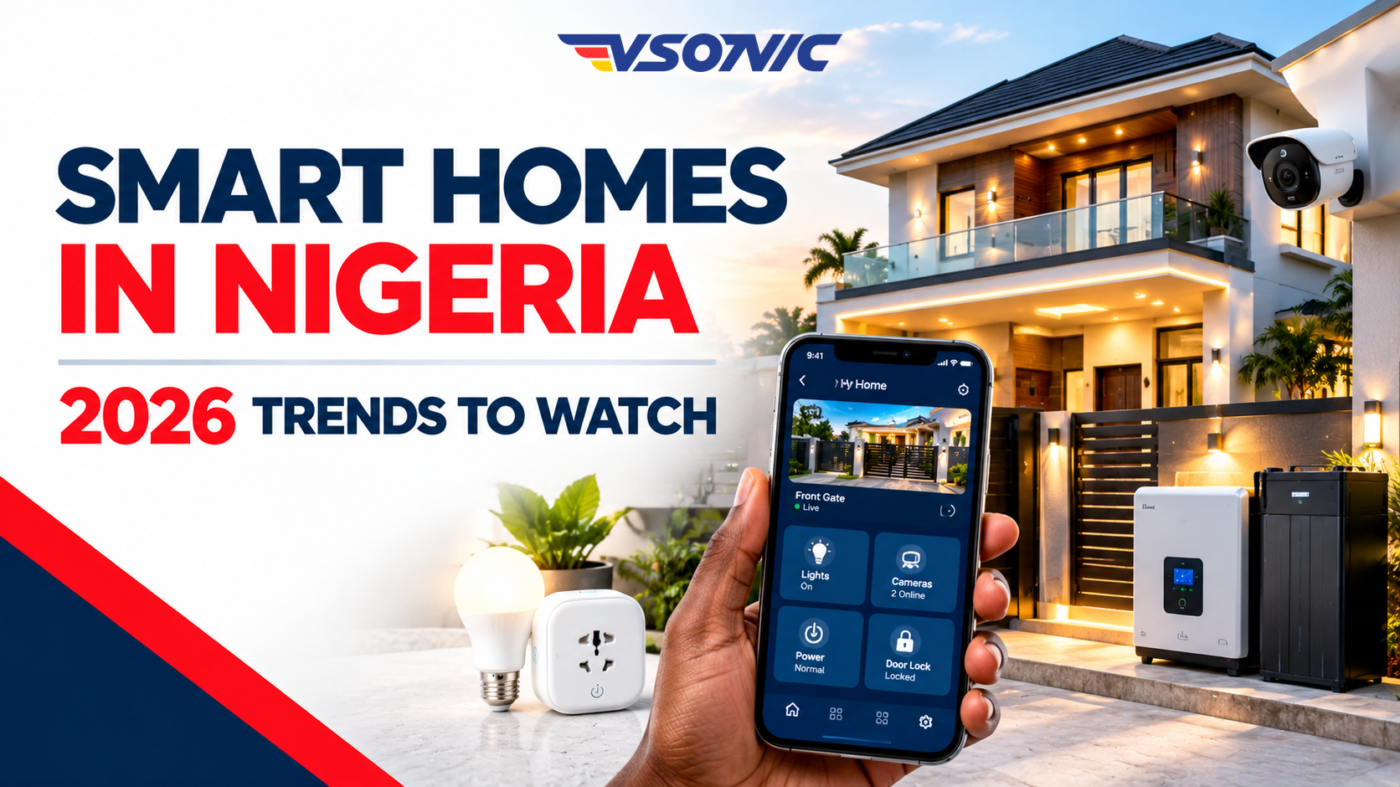
A smart home is no longer just a house with voice-controlled lights or an expensive television. It is a living space where devices such as security cameras, lighting systems, smart plugs, door locks, and selected appliances can connect to a smartphone or work together automatically.
In Nigeria, the most useful smart-home technologies are those that solve everyday problems: improving security, monitoring electricity usage, managing backup power, and making household routines more convenient. Recent market analysis also highlights security, energy management, and smartphone-controlled devices as important areas of development.
Here are the key smart-home trends worth watching in 2026.
1. Smarter Home Security and Remote Monitoring
Home security remains one of the most practical starting points for smart-home technology. Connected CCTV cameras, video doorbells, motion sensors, and smart locks can help homeowners monitor entrances and receive alerts when activity is detected.
With compatible equipment and an internet connection, users can check camera feeds from their smartphones while away from home. Some systems also support two-way audio, allowing residents to communicate with visitors remotely.
Why it matters in Nigeria: Homeowners, shop owners, landlords, and people managing properties from another city or country can benefit from greater visibility and control over their premises.
However, smart security devices should be protected with strong passwords, updated software, and reliable backup power. Remote monitoring is useful only when the system remains secure and operational.
2. Smart Power Management and Solar Integration
Electricity management is a particularly relevant part of the Nigerian smart-home conversation. Smart plugs, energy monitors, and compatible inverter or solar monitoring systems can help users understand power consumption and track system performance.
Depending on the equipment, homeowners may be able to check battery levels, solar generation, power usage, and system alerts through an app. Smart controls can also help schedule selected devices or reduce unnecessary standby consumption.
These technologies do not automatically eliminate electricity costs or solve power interruptions. Their value lies in providing better information and control over the equipment a household already uses. Energy management and integration with private power systems are emerging themes in Nigeria’s smart-home market.
3. Smartphone-Controlled Lighting and Appliances
Smart lighting and connected plugs can make everyday routines easier. Compatible devices may allow users to switch lights on or off remotely, establish schedules, or control selected appliances through an app or voice assistant.
For example, you could schedule an outdoor light to switch on in the evening or turn off a compatible lamp without walking across the room.
The important consideration is compatibility. Not every appliance can safely be operated through a smart plug, particularly equipment with high power demands. Always check the device’s electrical rating and the appliance manufacturer’s instructions.
For households new to home automation, starting with one or two useful devices can be more practical than attempting to automate the entire house at once.
4. Voice Assistants and Connected Home Ecosystems
Voice assistants and smart-home platforms can bring compatible devices together, allowing users to control multiple functions through one interface.
Depending on the products selected, a household may be able to use voice commands to adjust lighting, play music, or control compatible appliances. Automation routines can also combine actions, such as switching off selected lights when leaving home.
The challenge is that smart devices do not all work with every platform. Before buying, check whether products support the same ecosystem and whether important features depend on an active internet connection.
For Nigerian homes, it is sensible to prioritise useful functions and dependable operation over novelty.
5. Smart Water Management and Leak Detection
Water management is another area worth watching. Smart leak sensors, tank-level monitors, and compatible pump controllers can help households detect leaks, monitor water levels, or automate selected water-system functions.
In homes that depend on boreholes, pumping machines, and overhead storage tanks, these devices may help reduce avoidable water waste and provide better visibility into household water systems. Emerging research also identifies water monitoring as a promising smart-home application in settings where water supply can be inconsistent.
Installation matters, particularly where pumps and electrical systems are involved. Choose equipment suitable for the intended environment and use a qualified professional when electrical or plumbing work is required.
6. Smarter Home Appliances and Automation
Smart appliances are extending connectivity beyond security and lighting. Depending on the model, selected televisions, air conditioners, cleaning devices, and kitchen appliances can offer remote control, usage information, scheduling, or maintenance notifications.
The benefit is not simply that an appliance connects to the internet. It is whether its connected features save time, improve convenience, or provide useful information.
Before paying extra for smart functionality, consider whether you will actually use it, whether the device can be operated manually if connectivity fails, and whether replacement parts and technical support are accessible.
For many households, a reliable appliance with a few genuinely useful smart features may be a better investment than a complicated system with functions that rarely get used.
7. More Affordable, Modular Smart Homes
One of the most practical approaches to smart-home technology is to build gradually instead of investing in a complete automation system from day one.
A household might begin with a smart camera, add a video doorbell later, then introduce smart lighting or energy monitoring as needs and budget allow. Market analysis of Nigeria describes adoption as increasingly practical and selective, with consumers prioritising devices that solve immediate problems.
This approach has several advantages:
- Lower initial cost: Start with the devices that address your biggest concerns.
- Easier upgrades: Add compatible products as your needs change.
- Less complexity: Learn how each device works before introducing more.
- Better purchasing decisions: Avoid paying for features you may never use.
The key is to plan for compatibility from the beginning, especially if you expect to connect devices from different manufacturers.
8. Smart Homes Built Around Nigerian Realities
Perhaps the most important trend is the growing emphasis on smart-home technology that works under local conditions.
A useful smart home in Nigeria must account for electricity interruptions, internet reliability, device compatibility, and the cost of maintaining equipment. A system that depends entirely on uninterrupted power or cloud connectivity may not deliver the expected convenience during an outage.
Before purchasing, ask these questions:
- Does the device require continuous internet access, or can some functions work locally?
- Will it reconnect automatically after a power interruption?
- Can the router, cameras, and other essential devices operate on backup power?
- Is the product compatible with your smartphone and existing equipment?
- Are installation, maintenance, and replacement parts practical?
A smart-home system should make everyday life easier, not introduce unnecessary technical problems. Reliability, security, and ease of maintenance deserve as much attention as advanced features.
How to Start Building a Smart Home in Nigeria
You do not need to automate every room immediately. Start with a clear objective and choose equipment that addresses it.
| Your priority | Technologies to consider |
|---|---|
| Home security | CCTV cameras, video doorbells, motion sensors |
| Better lighting control | Smart bulbs, compatible switches, smart plugs |
| Electricity management | Energy monitors, compatible inverter or solar monitoring |
| Water management | Tank-level sensors, leak detectors, compatible pump controllers |
| Convenience | Compatible smart appliances and voice assistants |
Start with the feature that solves your most pressing problem. Check compatibility, power requirements, connectivity, warranty, and installation needs before committing to a purchase.
Frequently Asked Questions
Are smart homes expensive in Nigeria?
Costs vary significantly depending on the number of devices, their features, installation requirements, and whether you need additional infrastructure. Starting with a few essential devices can make adoption more manageable.
Can I make my existing house a smart home?
Yes. Many wireless smart devices can be added to existing homes without extensive renovation. Some installations, including smart switches, access controls, and pump automation, may require professional assistance.
Do smart-home devices work when there is no electricity?
It depends on the device and its backup arrangements. Battery-powered sensors may continue operating, while cameras, routers, and hubs generally need power. A suitable backup system can help maintain essential functions during an outage.
Do I need fast internet for a smart home?
Not every device requires a continuous internet connection, but remote monitoring and cloud-based features generally depend on connectivity. Check each product’s requirements before purchasing.
Final Thoughts: The Future of Smart Homes in Nigeria
Smart homes in 2026 are about more than luxury and convenience. They offer practical ways to improve security, monitor household systems, manage electricity usage, and simplify everyday tasks.
For Nigerian households, the smartest investment is not necessarily the most advanced device. It is the technology that solves a real problem, works reliably in the local environment, and provides value over time.
As connected security systems, energy monitoring, smart lighting, and automated appliances become more accessible, households can explore these technologies one step at a time.
Ready to upgrade your home with useful technology? Explore VSONIC.NG for technology products, surveillance equipment, power solutions, and household appliances to support a smarter, more convenient lifestyle.