
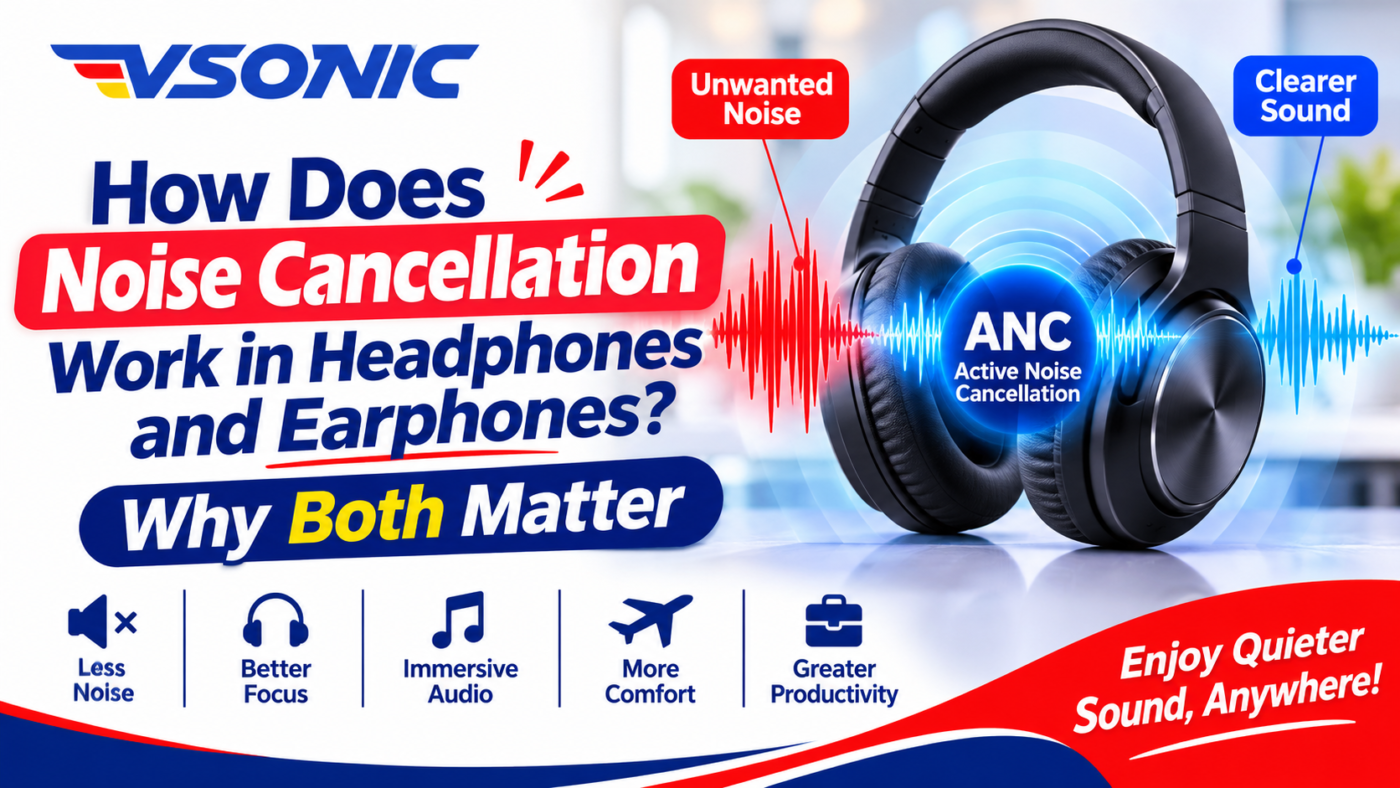
Have you ever put on a pair of headphones and noticed how the noise around you suddenly becomes less distracting? The sound of traffic, a noisy bus, an air conditioner or people talking nearby may seem quieter, allowing you to focus on your music, podcast or work. That experience is often made possible by noise cancellation technology.
Noise-cancelling headphones and earphones have become increasingly popular among commuters, students, remote workers, music lovers and travellers. However, not every headphone that reduces noise uses the same technology.
Understanding how noise cancellation works in headphones and earphones can help you choose the right pair, understand the difference between noise cancellation and noise isolation, and get more value from your purchase.
What Is Noise Cancellation?
Noise cancellation is a technology designed to reduce unwanted background sounds when listening through headphones or earphones.
There are two primary ways headphones reduce surrounding noise: passive noise isolation and active noise cancellation (ANC).
Although both can make your listening experience quieter, they work differently.
How Does Active Noise Cancellation (ANC) Work?
Active Noise Cancellation, commonly called ANC, uses microphones, electronic processing and speakers to reduce unwanted sounds around you.
Rather than simply blocking outside noise with physical materials, ANC headphones produce an additional sound signal designed to reduce the unwanted sound reaching your ears.
Here’s how the process works:
1. Microphones detect surrounding noise: Tiny microphones built into the headphones or earphones pick up sounds from the surrounding environment.
2. The electronics analyse the noise: The internal processing system evaluates the incoming sound and determines how to produce a suitable opposing signal.
3. The headphones generate anti-noise: The speakers produce a carefully controlled sound wave designed to counteract the unwanted noise.
4. The sound waves interfere: When the original sound and the opposing sound interact near your ear, they can reduce the resulting sound pressure through destructive interference.
Consequently, some background sounds become noticeably quieter.
What Is Destructive Interference?
Destructive interference occurs when sound waves interact in a way that reduces their combined amplitude.
Imagine a sound wave with peaks and troughs. ANC technology attempts to produce an opposing wave with appropriately matched characteristics so that the two waves reduce each other where you hear them.
This is why noise cancellation is sometimes described as headphones producing the opposite sound.
However, real-world noise cancellation is more complex than simply reversing a sound recording. The electronics must account for timing, sound characteristics and the environment around the listener.
What Is Passive Noise Isolation?
Passive noise isolation reduces surrounding sounds through the physical design of headphones or earphones.
Instead of electronically generating an opposing sound, the device creates a physical barrier between your ears and the surrounding environment.
For example:
- Over-ear headphones use padded earcups to cover your ears.
- In-ear earphones use ear tips that fit inside your ear canal.
- Ear cushions and materials help reduce the amount of outside sound reaching your ears.
A good fit is particularly important for in-ear earphones because gaps between the ear tips and your ears can allow unwanted sound to enter.
Passive noise isolation does not require ANC electronics to work. Therefore, even ordinary headphones without active noise cancellation can reduce some background noise.
Active Noise Cancellation vs Passive Noise Isolation
| Feature | Active Noise Cancellation (ANC) | Passive Noise Isolation |
|---|---|---|
| How it works | Uses microphones and electronics to produce opposing sound | Uses physical materials and fit to reduce sound |
| Requires electronics | Yes | No |
| Requires battery for the isolation mechanism | Generally yes | No |
| Common examples | ANC headphones and earbuds | Ear cushions and fitted ear tips |
| Effectiveness | Often particularly effective against steady background noise | Depends on design, materials and fit |
| Best known for | Reducing background noise electronically | Blocking or dampening sound physically |
Many modern noise-cancelling headphones combine both methods to improve the listening experience.
What Types of Noise Can Noise-Cancelling Headphones Reduce?
ANC headphones generally perform particularly well against relatively steady, low-frequency background noise.
Examples include:
- Aircraft engine noise.
- Bus and vehicle engine hum.
- Air conditioners.
- Fans.
- Generator noise.
- Certain continuous mechanical sounds.
However, sudden sounds and rapidly changing noises, such as conversations, shouting, door slamming or traffic horns, may not be reduced as effectively.
This is because unpredictable sounds can be more difficult for the noise-cancellation system to detect, process and counteract accurately.
Nevertheless, combining ANC with a well-fitting pair of headphones can help reduce a broader range of distracting sounds.
Why Should You Buy Noise-Cancelling Headphones or Earphones?
1. Better Focus at Work
If you work in a noisy office, shared workspace or busy environment, noise-cancelling headphones can help reduce distractions.
As a result, you may find it easier to concentrate on tasks, listen to presentations or work through documents.
2. More Comfortable Travel
Travelling by bus, aircraft or other noisy transport can become tiring when you’re constantly exposed to background noise.
ANC headphones can help reduce some of that noise, making music, podcasts and audiobooks easier to enjoy without feeling compelled to increase the volume excessively.
3. Improved Listening Experience
Background noise can interfere with the music, podcasts and videos you’re listening to.
By reducing some surrounding noise, noise-cancelling headphones may allow you to hear your content more clearly and enjoy a more immersive listening experience.
4. Better Online Meetings
For remote workers and students, noise-cancelling headphones can help reduce distracting sounds during online meetings and virtual classes.
Some models also feature microphones designed to improve voice transmission. However, microphone noise reduction and headphone ANC are different technologies, so check the product specifications before buying.
5. More Enjoyable Everyday Use
From studying and reading to commuting and relaxing, noise-cancelling earphones can be useful in many everyday situations.
However, remember that ANC is not a substitute for certified hearing protection, and you should remain aware of your surroundings when walking, driving or engaging in activities that require attention.
What Should You Look for When Buying Noise-Cancelling Headphones?
Before buying headphones or earphones with ANC, consider these features:
- Noise cancellation performance: Check reviews and product specifications to understand how effectively the headphones reduce surrounding noise.
- Comfort and fit: Choose a design that fits comfortably, especially if you intend to wear it for extended periods.
- Battery life: Wireless ANC headphones typically consume power when active. Consider battery performance with noise cancellation enabled.
- Sound quality: Consider audio clarity, bass, treble and overall listening experience.
- Microphone quality: If you regularly attend online meetings or make calls, microphone performance matters.
- Connectivity: Check Bluetooth compatibility, supported features and whether wired listening is available.
- Transparency mode: Some models allow outside sounds to pass through electronically, helping you hear conversations and surrounding activity without removing your headphones.
Final Thoughts
Noise cancellation technology has changed how people listen to music, work, study and travel. By combining microphones, electronic processing and sound waves, ANC headphones can reduce certain background noises, while passive isolation uses physical materials and fit to block or dampen surrounding sounds.
Although no headphone can eliminate every sound completely, choosing the right combination of ANC, passive isolation, comfort and sound quality can make a noticeable difference to your listening experience.
At VSONIC.NG, you can explore headphones, earphones and other multimedia accessories designed to complement your everyday lifestyle. Whether you’re listening to music, working remotely, travelling or relaxing, finding the right audio accessory starts with understanding what you need.
VSONIC.NG – Everything Tech. One Platform. One VSONIC.